
Antique French label: “Chicorée au Kurde”
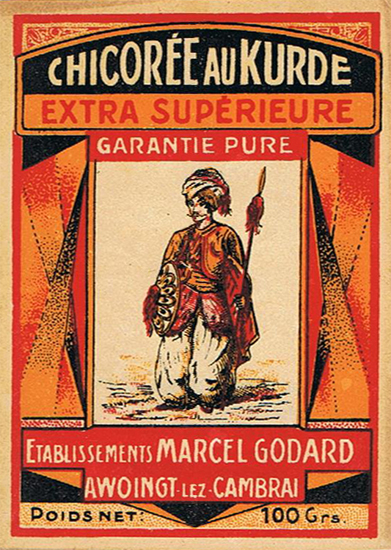
Chicorée Au Kurde (1850 – 1930)
Kurdish coffee (Qehweya Kurdî or Qehweya Kezwanan) traditionally refers to a hot, naturally caffeine-free beverage made from roasted and ground terebinth fruits. Chicory coffee, however, is made from roasted and ground chicory root. Although these are different plants, both have historically been used as caffeine-free coffee substitutes.
From the early nineteenth century—more than a century before the establishment of the modern Turkish Republic—a chicory product was marketed in France under the name “Chicorée au Kurde.” Historical labels bearing this name are believed to date from the period between approximately 1830 and 1930.
The image shows a label for a product called “Chicorée au Kurde.” It was described as Extra Supérieure—meaning “extra superior”—and Garantie Pure, meaning “guaranteed pure.” The product was manufactured or distributed by Établissements Marcel Godard in Awoingt, near Cambrai in northern France. The package contained 100 grams.
The label depicts a man dressed in what was presented as traditional Kurdish clothing and holding a staff or sceptre. This gives the product a Kurdish cultural identity.
Coffee drinking is also mentioned in the Kurdish love epic Mem û Zîn, written by Ehmedê Xanî in 1692 and based on a much older oral tradition. In the epic, drinking coffee and playing chess are portrayed as popular social activities among men.
The label is an example of the colourful and highly detailed commercial designs commonly used on European food packaging during the late nineteenth and early twentieth centuries. Chicory roots were dried, roasted and ground to produce either a coffee substitute or an ingredient that could be blended with coffee.
The name “Chicorée au Kurde” associates the product with Kurdish identity and culture. The expressions Extra Supérieure and Garantie Pure emphasise its supposed high quality and purity—claims commonly used by manufacturers to distinguish their products in the marketplace.
The illustrated figure in Kurdish clothing gives the label an ethnic and cultural character. During that period, European manufacturers frequently used images of peoples and cultures regarded as “exotic” to suggest authenticity and make their products more distinctive.
In summary, this label is an example of historical advertising that combines product information with Kurdish cultural imagery to attract consumers and create a recognisable identity for the product.
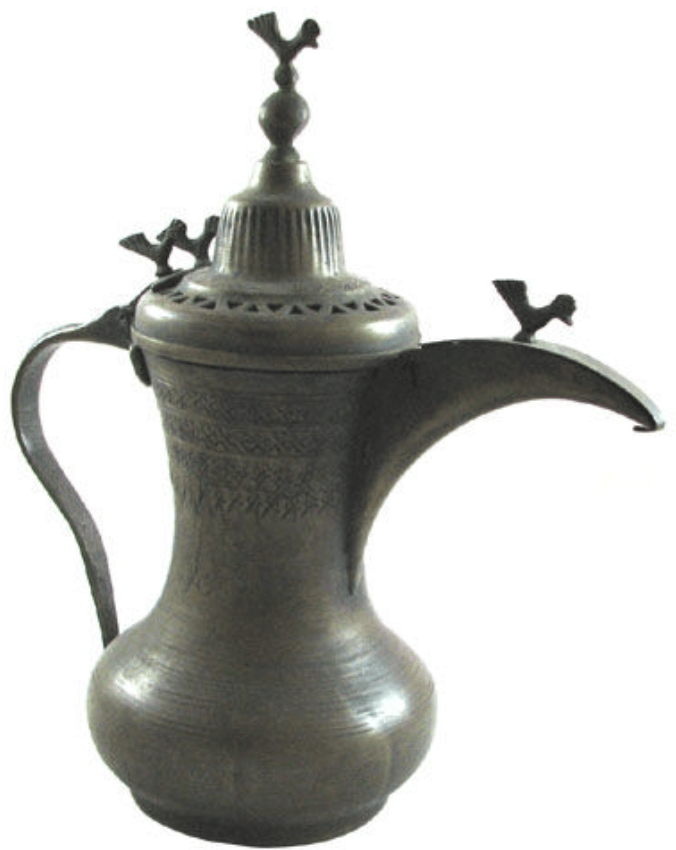
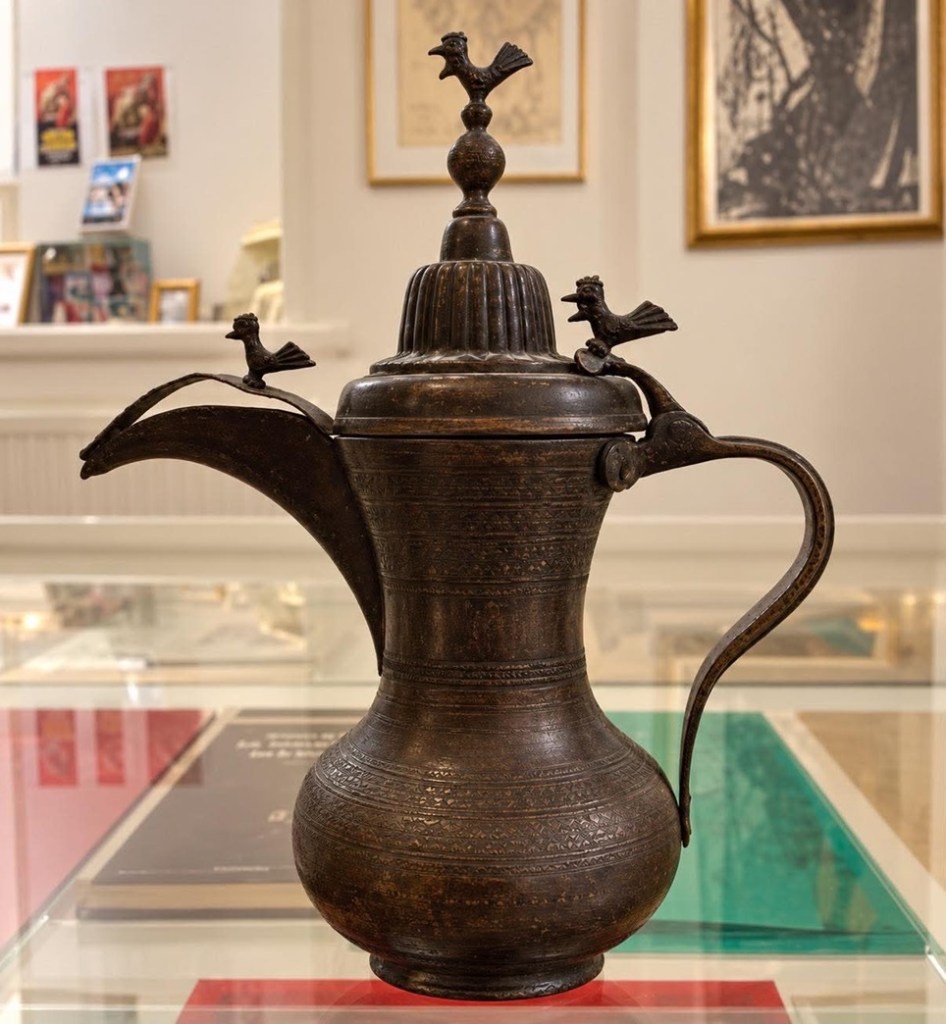
A nineteenth-century Kurdish coffee pot believed to have been used by the Kurdish tribal leader İbrahim Pasha Millî.
The pot has seven tiers or levels. These may possibly be interpreted as a symbolic reference to the seven sacred beings of Kurdish Faith Yezidism, also known as the Seven Angels or the Seven Mysteries (Heft Sirr). They are led by the Peacock Angel, Melekê Tawûs.
The seven sacred beings are commonly identified as:
- Melekê Tawûs
- Melek Şemsedîn
- Melek Nasirdîn
- Melek Fexredîn
- Melek Sicadîn
- Melek Şêxsin
- Melek Şêxûbekir
The small bird on the lid is believed to represent a peacock and may therefore symbolise Melekê Tawûs, the foremost of the seven sacred beings.
Kurdish
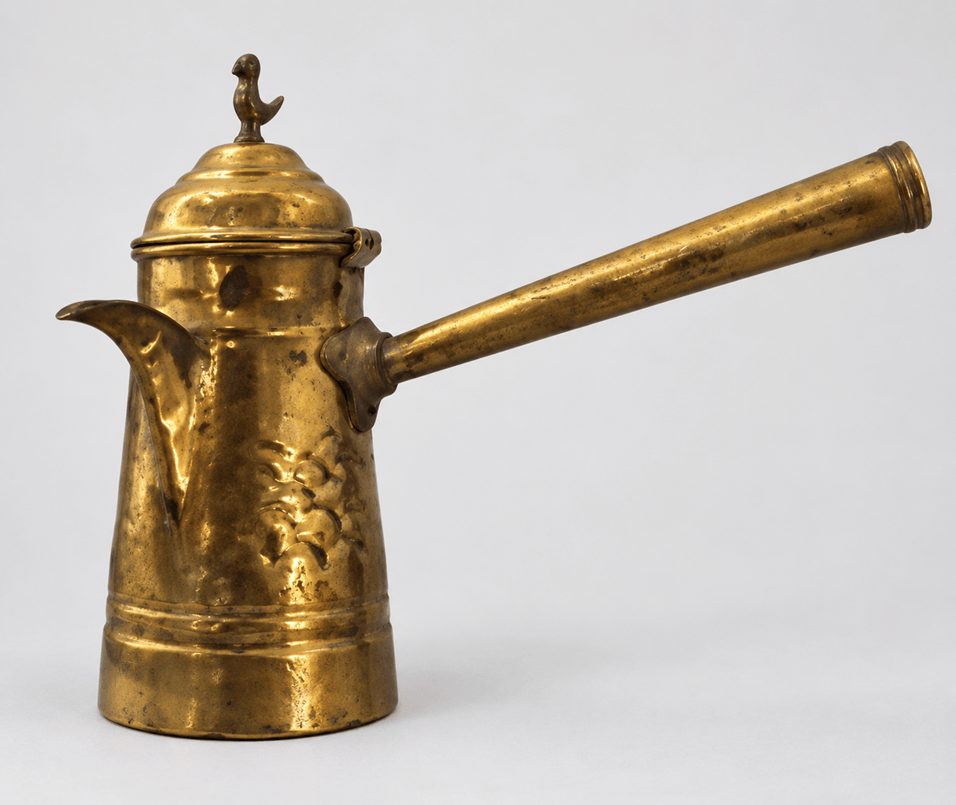
Another twentieth-century Kurdish coffee pot made of brass, also featuring the Peacock Angel, Tawûsê
https://saradistribution.com/authenticurdishaffects.htm


